What if the women once branded as witches were simply… menopausal?
It sounds provocative, but in the Middle Ages when the body was a mystery and the mind, a moral battleground, a woman with hot flushes, rage, or insomnia might be labelled mad, cursed, or even dangerous.
Menopause has always existed, but it wasn’t studied or named until the 19th century. Before then, it was wrapped in silence. So how did women cope? And why were their symptoms so often misunderstood as something dark or unnatural?
Let’s explore how ancestral knowledge, fear, and female biology collided in an era where symptoms without explanation could turn a woman into a suspect of witchcraft, madness, or sin and her suffering into a reason to fear her.

Menopause
The term “menopause” wasn’t coined until 1821 by French physician Charles Pierre Louis De Gardanne.
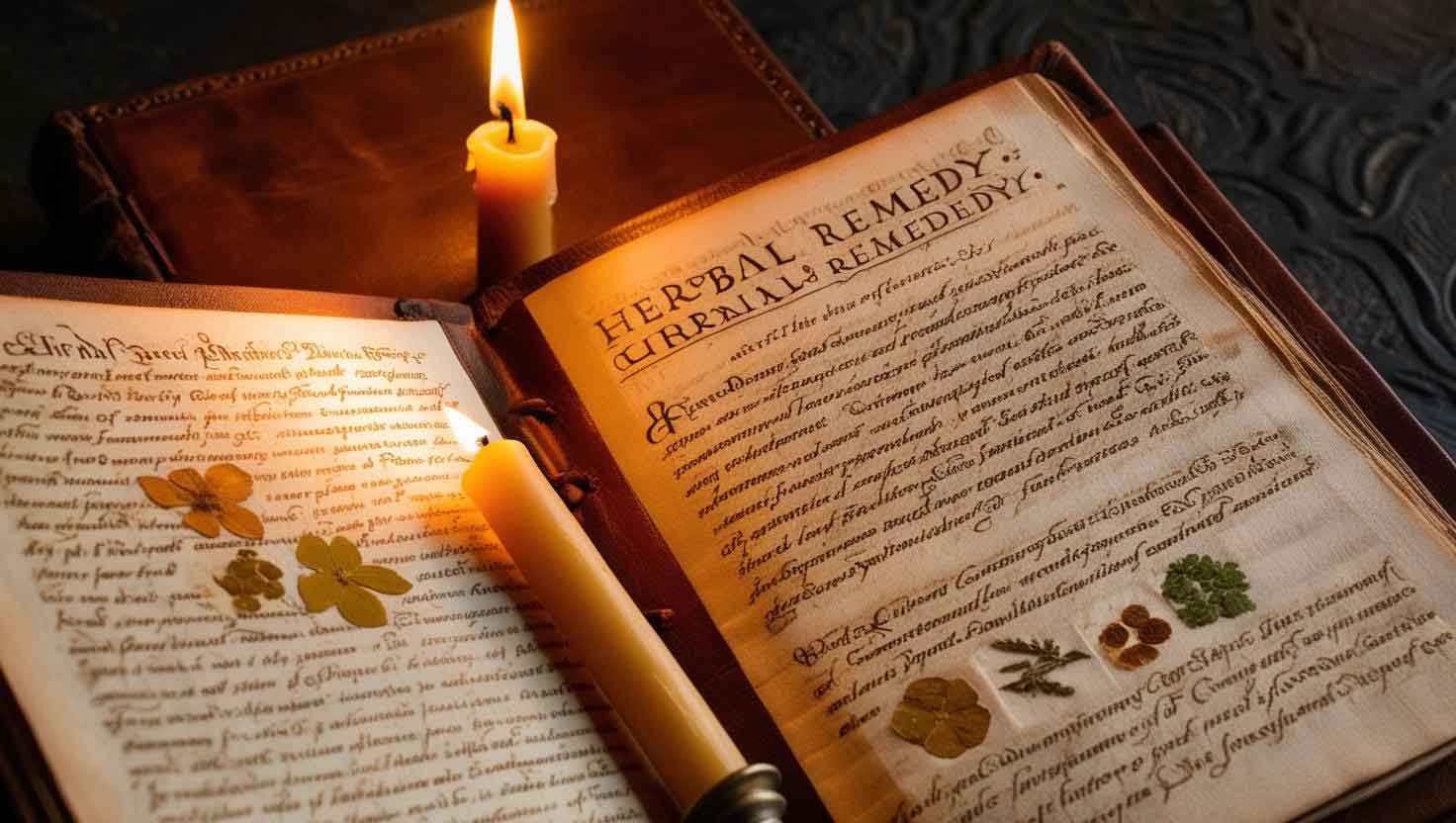
Before then, menopause didn’t have a single, recognised name. Before the word “menopause” even existed, menstruation itself was only referred to in euphemisms like ‘the flowers’ suggesting delicacy, modesty, or even shame. When the flowers stopped blooming, women were left without language or understanding for what came next. Only euphemisms such as “the cessation of the flowers.”
So, before the 19th century, this whole experience was unnamed, which made it easier to misunderstand, fear and punish. Without modern medicine, medieval women faced troubling symptoms with no explanation. Menopausal symptoms were not seen as biology, but instead interpreted through a lens of spiritual and moral threat:
- Hot flushes: signs of inner fire or demonic possession.
- Mood swings: irrationality or hysteria.
- Insomnia or vivid dreams: contact with the devil.
- Crawling skin sensations: spirits or creatures under the flesh. Not a drop in oestrogen, as we now understand through modern science.
Today, we recognise this shift not as a loss but as a powerful, biological transition. Once feared, menopause can now be reclaimed as a time of wisdom, clarity and renewal.
Magic
Without blood tests, nutrition plans or therapy for anxiety, women turned to what they had: each other and the knowledge passed down through generations.
Medieval healing included:
- Mugwort, sage, and motherwort to support hormonal balance.
- Herbal teas, baths, and poultices for inflammation and pain.
- Fumigation rituals to soothe the womb.
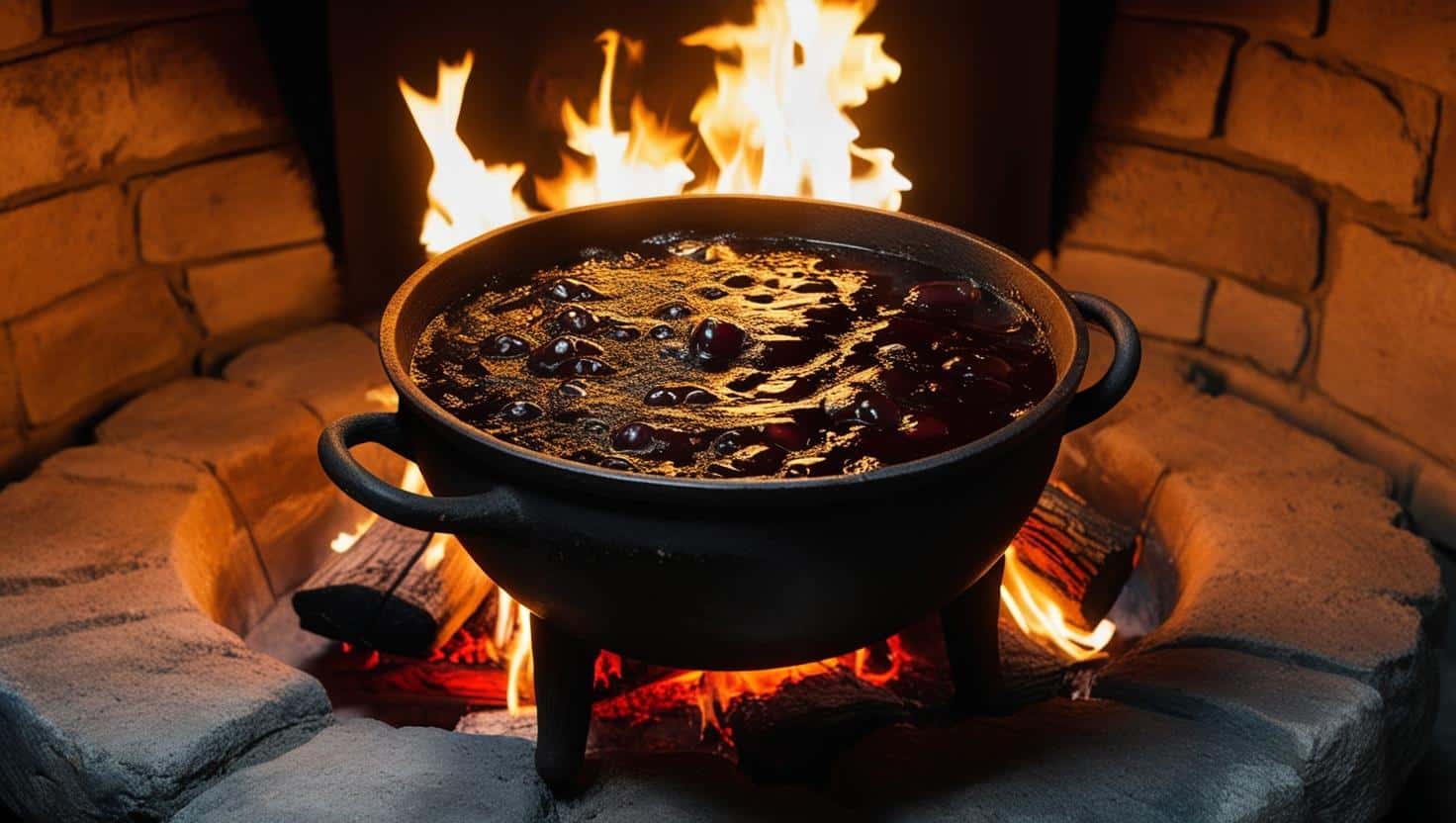
But “magic” wasn’t just herbal. It might mean whispering a blessing over a pot of steeping nettle a comfort for one woman, but a suspicious cauldron to another. It could be singing alone in a candlelit room. Burying herbs at the threshold. Or tying strands of hair with cloth to protect a home.
These practices, led by midwives and wise women, were condemned as heresy by the Church and early medical authorities. Healing became witchcraft. Wisdom became a threat.
Today, hypnotherapy may still feel mysterious to some but the real magic lies in its science-backed ability to bring calm, focus, and transformation. Not through superstition but through science. Not through fear but through clarity.
Misunderstanding
Too hot, too itchy, maybe even witchy? Just women going through stages of menopause.
In the absence of medical understanding, the menopause became misread. The term “The curse” applied not only to menstruation, but to what followed. A woman who could no longer bear children, who spoke her mind, or who didn’t fit the mould of the quiet fertile wife was seen as problematic.
- If she cried: she was mad.
- If she raged: she was possessed.
- If she healed herself: she was a witch.
Men were accused of witchcraft too, but only typically if they challenged religious authority. For women, the punishments were frequent and brutal.
Ducking Stools: Damned if she did, dammed if she didn’t…
Ducking stools were wooden chairs or frames, often attached to a long lever, designed to publicly punish people most often women accused of wrongdoing.
Originally, around the 14th and 15th centuries ducking stools were used mainly for minor offences like gossiping, public disorder, or selling bad ale. But by the 16th and 17th centuries, the ducking stool became more closely associated with witchcraft accusations.
In witch trials, the ducking stool test was believed to reveal whether someone was a witch.
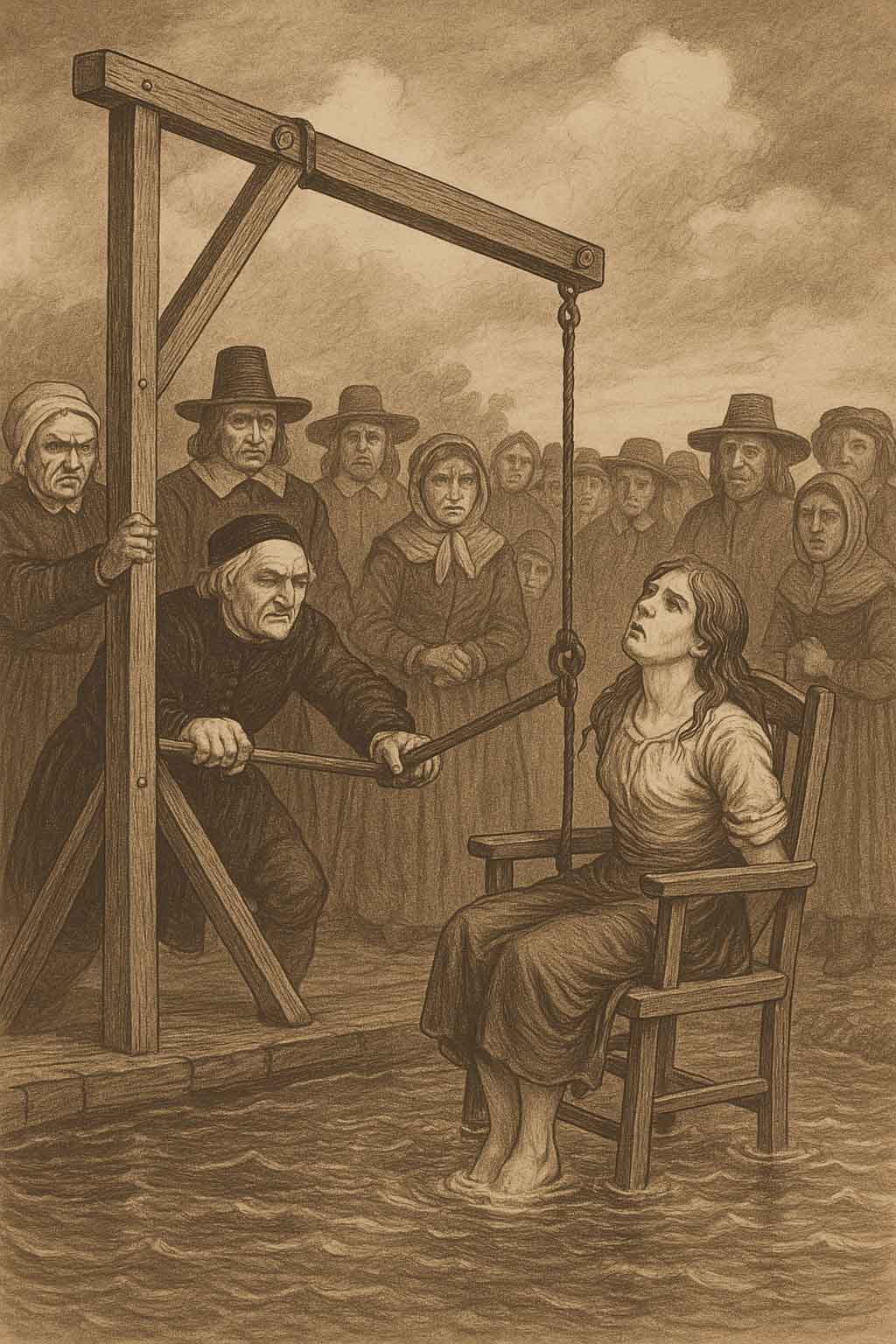
How it worked:
- The accused woman would be strapped into the stool, which was attached to a long beam on a pivot over a river or pond.
- She would then be lowered repeatedly into the water, so ‘ducked’ and pulled back up.
The ducking stool test was based on the idea that water was pure and would reject evil.
Therefore, if a woman floated, the water had rejected her evil and she were guilty. However, if she sank, she was declared innocent but often drowned in the process.
The ducking stool was not about justice, it was a no-win system designed to uphold suspicion and silence women.
We may no longer face witch trials, but misunderstanding hasn’t gone. Many women still feel their symptoms are misread or dismissed.
Hypnotherapy: The Magic of Confidence and Calm
Hypnotherapy offers a drug free deeply restorative way to work with your body and mind. A return to yourself with clarity, confidence and ease. To feel seen, heard and whole again.
Not in spells, but in a practice informed by science and shaped by calm. That’s hypnotherapy.
The magic is real it just looks different now.
Ready to feel more like yourself again?
If menopause has left you feeling overwhelmed, dismissed, or disconnected from who you are, I’d love to help.
The first step?
Head to my contact page to get in touch and request your complimentary discovery call. This helps us start with focus, clarity, and connection.